
Othala Technology / Custom manufacturing
Machining for education and research.
Manufacturing discussions for experimental hardware, fixtures and prototype assemblies. The application determines the acceptance requirements; the drawing determines the part.
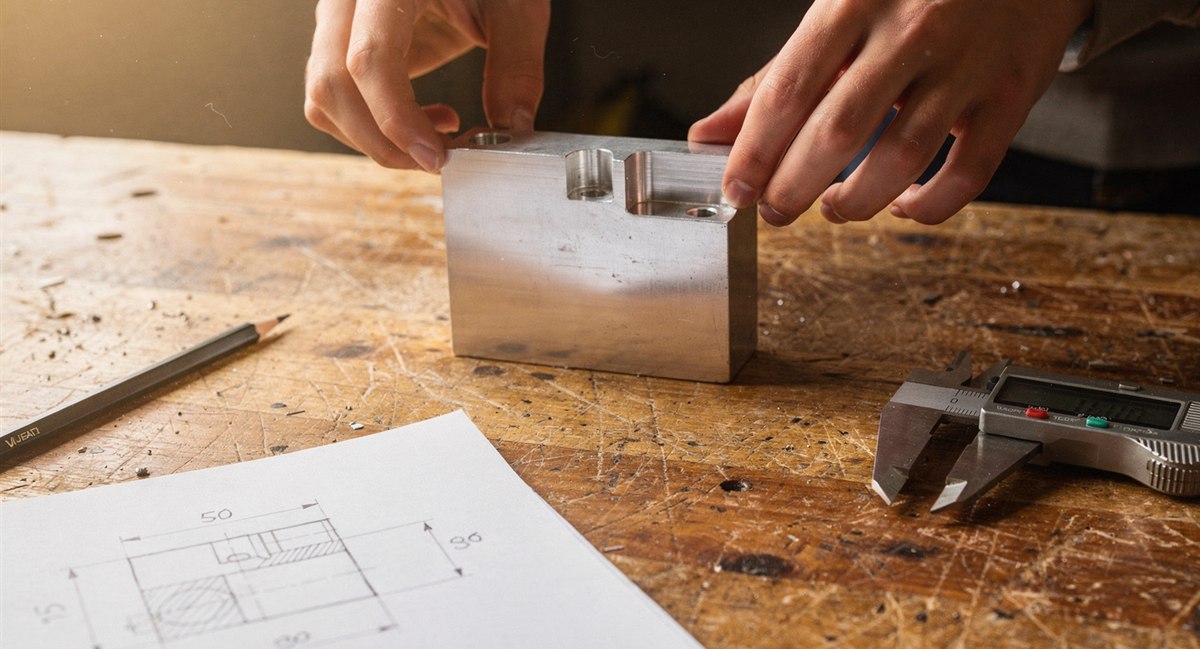
Research projects: make the test objective explicit.
What the experiment must show
Identify the geometry, material or interface that affects the result. Separate essential dimensions from features used only for mounting or handling.
One-off parts and iterations
Assign revisions to each trial design and record which sample was tested. A changed drawing should be reviewed as a new definition rather than silently replacing the earlier version.
Budget and delivery priorities
Separate must-have requirements from optional finishing and documentation. A clear test purpose helps compare manufacturing options without assuming that a prototype can validate every production requirement.
Describe the experiment and the hardware it needs.
Identify whether you need a specimen holder, sensor mount, alignment fixture, adapter plate or prototype enclosure. Explain what the hardware must locate, support or expose during the experiment. Show interfaces to existing lab equipment and identify features that influence the measurement.
For fixtures, define the locating surfaces, clamping points and access needed to load or remove the specimen. Separate the fixture drawing from the specimen drawing. Use the rapid prototyping service page to discuss the trial objective and the evidence needed before moving to another revision.
Control revisions and explain lab constraints.
Give each one-off design a part number and revision. When comparing iterations, identify the changed features, label the samples and connect each test record to the corresponding drawing. State which revision is released for quotation and which alternatives remain exploratory.
Describe relevant lab constraints, such as cleaning, chemical exposure, vacuum use or restrictions on magnetic materials. Define requirements for review instead of assuming a process name establishes suitability. To manage a limited budget, separate essential interfaces from optional appearance work. Consider 3D printing for geometry exploration where appropriate, while stating which material or functional questions still require separate validation.
What to send for a quote
- Test objective, current drawing and model, with the released revision identified.
- Quantity per design and a list of variants to quote separately.
- Material requirements, lab constraints and interfaces to existing equipment.
- Fixture references, assembly access and features needed for the experiment.
- Essential inspection records, optional finishing and budget priorities for review.
Use the CNC machining quote requirements checklist to organize the files, then send your research part RFQ. Name the person who can approve design changes.
Select the route for this application.
Use CNC when the trial depends on stock material and machined interfaces. Consider additive models for geometry exploration and pilot tooling when the intended molded material is essential to the test.
Quality evidence that matches the order.
Agree the drawing revision, critical dimensions, inspection method and required records before production. Dimensional checks can include coordinate measurement, optical inspection and gauges as appropriate to the feature. Material records and inspection reports should be listed in the order scope; a report is not automatically a product certification.
Company and quality information →Project scope and approvals.
These are application considerations, not a gallery of completed customer projects. Production routes, any specialist partner operations and required documents are confirmed for the order. Company quality-system certification does not by itself establish product approval or cover every application. For regulated or customer-controlled programs, review the applicable certificate scope and customer requirements before qualification.
Company information →Research part review FAQ
What should a one-off part request explain?
State what the experiment must establish and which features affect the result. Identify provisional choices and agree the delivered condition before releasing the design.
How should a revised trial part be ordered?
Send the new revision with a change summary. Identify whether it replaces an earlier design or forms a separate comparison sample, and keep the associated test records distinct.
Where should budget trade-offs start?
Ask for optional finishes and nonessential features to be reviewed separately. Preserve requirements that determine the experiment's result, and approve any proposed simplification before manufacture.
A clear route to your next part.
Engineering review connects the drawing, manufacturing route and acceptance requirements. Ask for an NDA before sharing confidential information.