
Custom CNC machining services
Custom CNC machining.
Defined by your drawing.
CNC milling and turning for custom metal parts. Align material, geometry, finish and inspection with the function of your component.
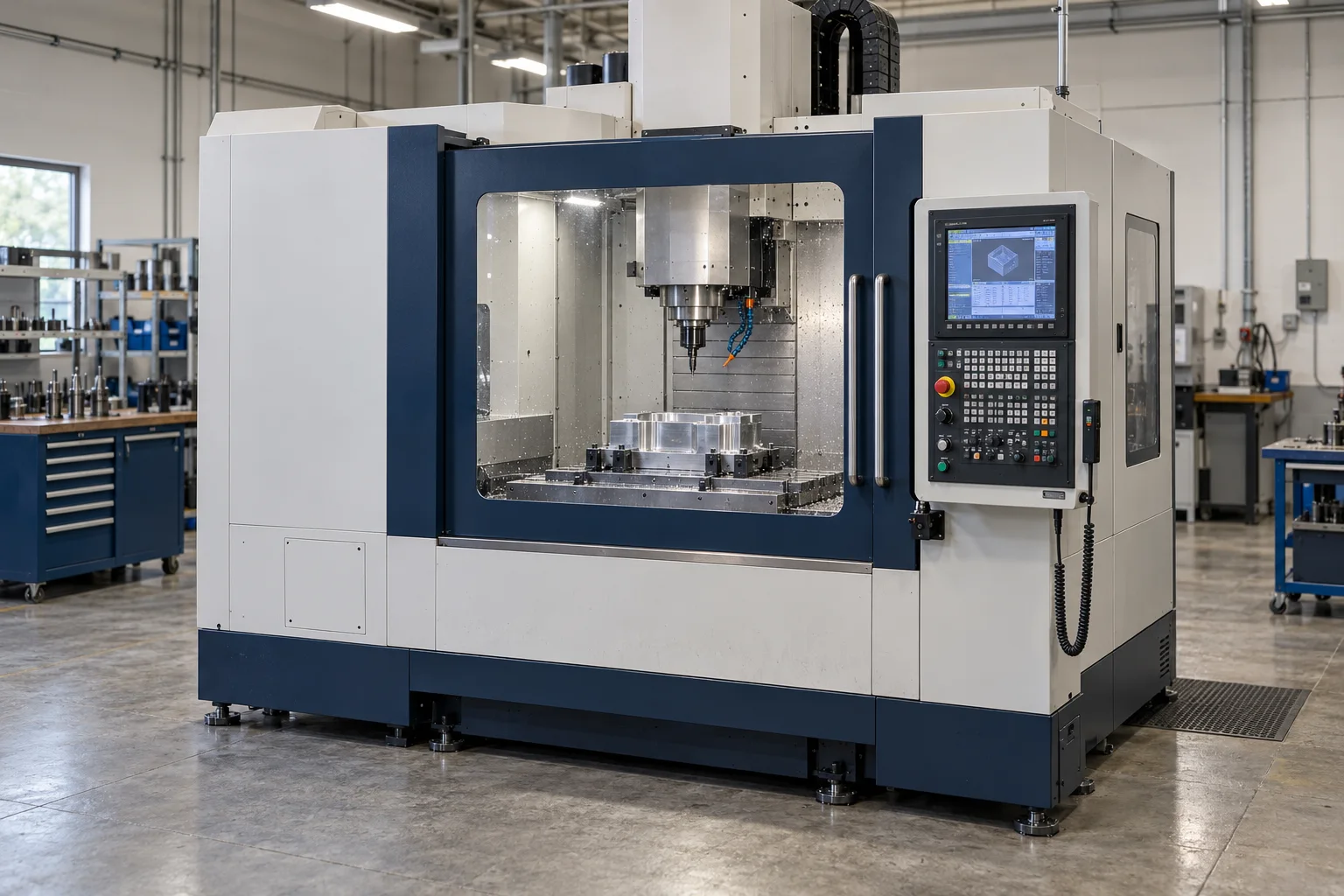
Choose your process
Milling, turning and complex part geometry.
Select a process around the features of the part. Our team reviews the manufacturing approach against your drawing.
CNC milling
Prismatic parts, pockets, slots and machined faces. Highlight datum references and mating surfaces.
View service →CNC turning
Rotational components, bores and shafts. Define concentric features, threads and functional fits.
View service →5-axis machining
Complex surfaces and multi-face features. Discuss access, setup strategy and inspection with our team.
View service →Materials & requirements
Specify the grade, not just the material family.
Our documented metal capability includes aluminum, stainless steel, titanium, Nitinol and cobalt-chromium. Suitability is reviewed for each design and process.
| Requirement | What to specify | Why it matters |
|---|---|---|
| Material | Exact alloy or standard, condition, permitted substitutes, material certificates and heat or lot traceability. | Grades and heat treatment affect machining and part performance. |
| Critical dimensions | Approved PDF drawing and STEP model of the same revision, with datums, tolerances and mating features; say whether DFM feedback may propose tolerance or design changes. | A general tolerance cannot define every functional requirement. |
| Surface finish | Roughness, cosmetic faces, coatings, masking, deburring, cleaning and packaging; the specification for any special process such as welding or electropolishing. | Finishing can affect dimensions, fit and appearance. |
| Inspection | Critical characteristics, measurement method, sampling, report format and whether a certificate of conformance (CoC) is needed. | Acceptance criteria should be agreed before production. |
| Quantity & schedule | Prototype quantity, quantity tiers and units, repeat order expectations, target date, target price range and trade terms. | Setup and process planning depend on the production context. |
| Parts & assembly | Complete BOM including purchased parts, and the assembly or function acceptance criteria. | Defines which components and checks the quote includes. |
On small screens, swipe the table horizontally to see every column. Final requirements are confirmed during engineering review.
Explore the material guide →From machined features to accepted parts.
Plan the machining sequence
Review the stock, access to each feature and the surfaces used to locate the part. Secondary operations and finishing belong in the plan before the final dimensions are accepted.
Check the functional features
Agree how mating diameters, hole positions, threads and sealing faces will be checked. A sample report should identify the drawing revision and the features covered.
Release repeat orders
Use the approved material, finish and part revision as the production reference. Agree sample approval, inspection records and packaging for surfaces that need protection.
Project questions
Before you request a quote.
A few details help us give you a more useful response.
Can you quote from a 3D model alone?
A model helps define geometry. Add a dimensioned PDF drawing to identify tolerances, threads, finish and inspection requirements that may not be explicit in the model.
What tolerances can you achieve?
Achievable tolerances depend on the material, geometry, setup and inspection method. Mark the critical features in your drawing so we can confirm feasibility for your specific part.
Can I request prototypes before repeat production?
Yes. Share the prototype quantity and expected production demand so the review can consider both stages. Sample and production requirements are agreed for the project.
Related manufacturing routes
Planning the next stage?
For prototypes, repeat batches, plastic parts and production tooling, explore the related services.
Surface finish and inspection are part of the specification.
Edges and visible surfaces
Separate burr removal and edge breaks from cosmetic requirements. Identify edges that must remain sharp, appearance faces and areas where machining marks are acceptable.
Finishing sequence
For anodizing, polishing or another specified treatment, agree the material compatibility, masking and the point at which final dimensions are checked. Specialist finishing routes are confirmed in the quote.
Inspection coverage
CMM, optical inspection and gauges serve different features. Agree the measurement approach, sample size and report requirements for the part; a report is useful only when it covers the characteristics needed for acceptance.
Where CNC machining fits best.
Consider milling for faces and pockets, turning for rotational geometry, and a combined route when a part contains both. Deep features, slender sections or limited access need a specific setup review. A simple part may be economical with a simpler route even when multi-axis machining is available.
Prototype and production quantities can use the same drawing while requiring different fixtures, inspection effort or material purchasing. Compare the complete route, including finishing and inspection, when evaluating a quote.
Precision machining and acceptance planning →Technical guides
Related reading
- CNC machining quote requirementsWhat drives the price and what to send with an RFQ.
- CNC milling vs turningWhich part features point to each process, and when mill-turn fits.
- Choosing a CNC machining materialFrom function and environment to grade, condition and callout.
- CNC part inspection requirementsCritical features, methods, sampling and reports.
- 5-axis CNC machining explainedWhen multi-face parts benefit from 5-axis setups.
Have a drawing ready?
Send your design, material and target quantity. We’ll review the requirements and the right manufacturing route.