A CNC machining quote is only as good as the package behind it. Price comes from a few factors under your control: material, tightest drawing tolerances, setup count, finish, inspection requirements, and quantity. When one piece is missing, the shop must guess, and guesses are priced conservatively.
This guide covers what drives price, what to include in a request for quotation (RFQ), and how to compare quotes from different suppliers based on identical assumptions.
Key Takeaways
- Machine time is rarely the whole price. Setups, programming, fixturing, inspection, and finishing often weigh more, especially on small batches.
- The drawing drives the quote. A 3D model shows shape; the 2D drawing shows which features matter and how they will be checked.
- Tight tolerances should be placed only where function requires them. One ±0.01 mm note applied to a whole part can multiply inspection time.
- Send the same package to every supplier. Quotes are only comparable when they are based on the same revision, quantity, and acceptance criteria.
- Ask for prices at two or three quantities, and keep prototype and production requests separate. They answer different questions.
- A one-page RFQ summary (template below) answers most initial supplier questions before they are asked.
What a CNC Machining Quote Is Built From
Most shops build a quote from the same blocks, even if they present one number:
| Cost block | What drives it |
|---|---|
| Material | Grade, stock size, certification requirements, availability |
| Programming and setup | Number of setups, fixture design, first-part prove-out |
| Machining time | Material removal, feature count, tool changes, finish passes |
| Secondary operations | Heat treatment, anodizing, plating, passivation, deburring |
| Inspection | Number of characteristics, measuring method, report format |
| Packaging and logistics | Part protection, labeling, shipping method |
On a batch of ten parts, programming and setup can be the biggest block. On a batch of a few thousand, cycle time and material dominate. That is why unit price drops sharply between prototype and production quantities, and why asking for prices at two or three quantities is useful.
The Six Factors That Move the Price Most
1. Material grade and stock form
Material affects price twice: once in stock cost, and again in cutting speed. Aluminum 6061 machines quickly; stainless steel 316L and titanium cut slower and wear tools faster. Specify the exact grade and temper (for example "6061-T6", not "aluminum"), and state whether a mill certificate is required.
If the grade is open, say so. A shop can often suggest an equivalent that is easier to source or machine.
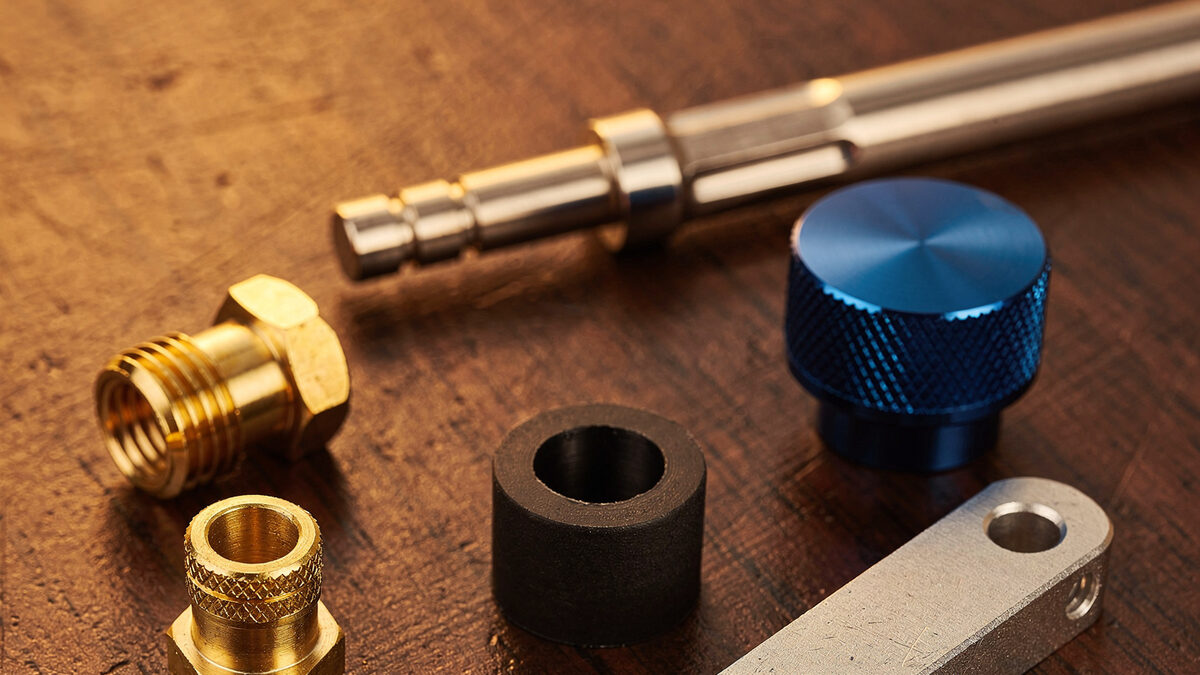
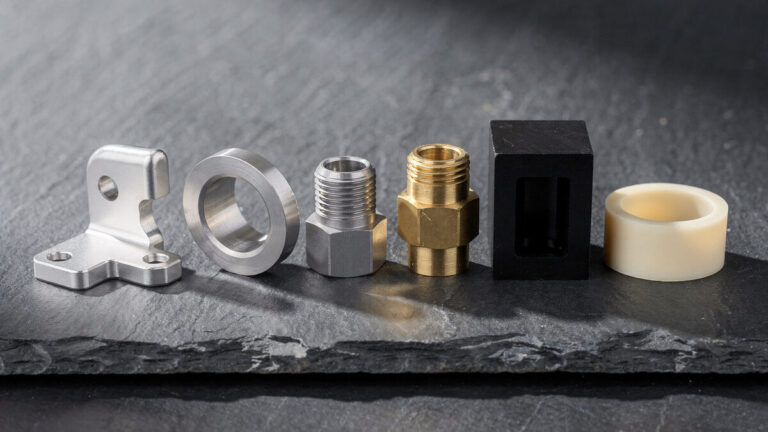
The same simple shape can carry very different prices in brass, stainless steel, engineering plastic, or anodized aluminum. Plastics such as POM or PEEK bring specific questions, such as stability after machining and how dimensions are measured, so name the exact grade there too.
2. Tolerances and where they sit
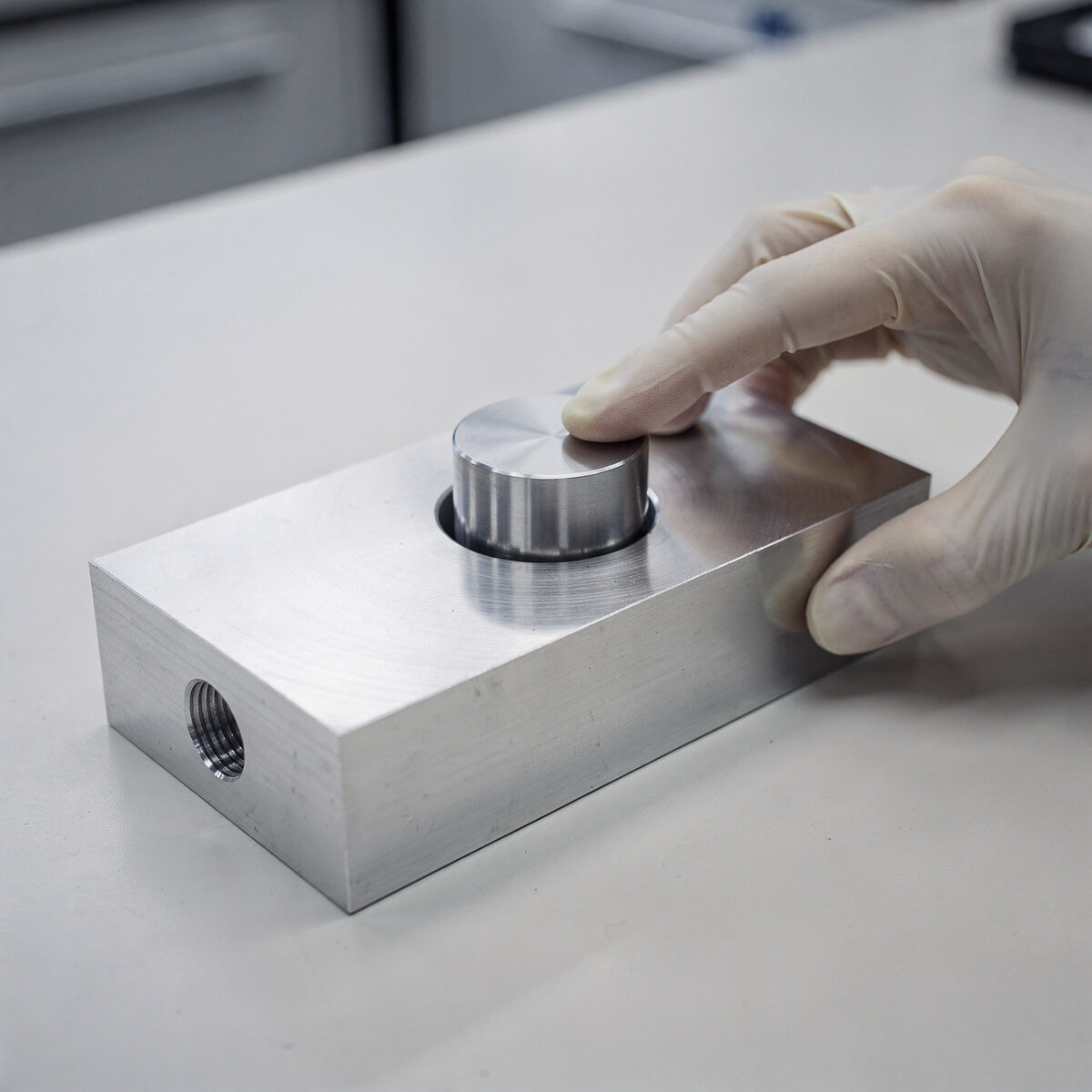
Standard machining tolerances are inexpensive to hold. Each tighter tolerance adds cost through slower finishing passes, more careful fixturing, and more measurement. A common mistake is a title-block tolerance that forces every dimension into a tight band, even non-mating features.
Mark critical features clearly and leave the rest at a general tolerance. Othala’s machining capability reaches ±0.01 mm on selected milled features and finer on selected turned diameters, but whether a specific feature can hold that depends on material, geometry, and measurement method. A good quote identifies which features drive cost.
3. Geometry and number of setups
Every time a part is unclamped and re-fixtured, the shop pays in time and you pay in tolerance stack-up between features on different faces. Deep pockets, thin walls, small internal radii, and features on five or six faces all add setups or special tooling.
Five-axis machining can reduce setup count for complex parts, but it costs more per hour. For a part with features on one or two faces, a 3-axis route is usually cheaper.
4. Surface finish and secondary processes
As-machined finish is the default. Anything beyond it may need extra finishing passes or a separate operation: a tighter Ra value can often be reached on the machine, while bead blasting, anodizing, plating and passivation are separate steps, often done by a specialist partner. Specify the finish per surface where it matters, and call out masking if threads or bores must stay uncoated.
5. Inspection and documentation
A first article inspection report measuring every dimension takes far longer than checking five critical features. Specify what you need: a full dimensional report, a CMM report on selected features, material certificates, or a certificate of conformance. Asking for more documentation than the application requires raises the price without improving the part.
6. Quantity and delivery
Quantity changes the process. A prototype may be cut from bar stock with general-purpose fixtures; a production order may justify dedicated fixtures and a refined toolpath. Provide the realistic first order quantity, any expected repeat volume, and your target delivery date. An expedited date is sometimes possible, but typically incurs additional cost.
What to Send With Your RFQ
Use this checklist to keep the first round of questions brief:
| Item | Why it matters |
|---|---|
| 2D drawing (PDF) with revision letter | Defines tolerances, datums, threads, finish, and notes |
| 3D model (STEP or IGES) | Enables programming and machining time estimation |
| Material grade and temper | Sets stock cost and cutting parameters |
| Critical features | Shows where tight tolerances and inspection effort belong |
| Surface finish and coating | Adds or removes secondary operations |
| Heat treatment | Changes process route and sometimes material |
| Quantity, with possible repeat volume | Determines setup amortization and fixturing |
| Inspection and documents required | Sets inspection time and report format |
| Application, in one or two sentences | Helps the engineer judge which features are functional |
| Target delivery date | Affects scheduling and shipping method |
If you cannot share application details, a brief note such as "mating part for a sealed housing" helps guide the review.
A one-page RFQ summary you can copy
Place this on the first page of the PDF or in the email body. It saves a round of questions and makes returned quotes easier to compare. Example entries are illustrative.
| Field | Example entry |
|---|---|
| Part name and number | Sensor bracket, BRKT-102 |
| Drawing and model revision | Rev C (PDF and STEP both Rev C) |
| Material and condition | 6061-T6; equivalent grades acceptable after approval |
| Critical features | Bores A and B, flatness of datum face; see balloons 4, 7, 12 |
| General tolerance | As drawing title block |
| Finish per surface | Clear anodize; bores and threads masked |
| Heat treatment | None |
| Quantities to quote | 10 / 100 / 1,000 |
| Expected annual volume | About 3,000, called off monthly |
| Inspection and documents | FAI on first batch; material certificate; C of C each shipment |
| Packaging | Individually bagged, no metal-to-metal contact |
| Target delivery and terms | Samples by a named date; Incoterm named |
| Application | Mounts an optical sensor; bores locate dowel pins |
| Technical contact | Name and email of the engineer who can answer questions |
Name files so revisions cannot drift
Assign each part one folder or archive, and include the part number and revision in every file name, such as BRKT-102_RevC.pdf and BRKT-102_RevC.step. If model and drawing disagree, state which governs. A quote built on an old model frequently leads to re-quoting after order placement.
Prototype and Production Quotes Are Different Questions
A prototype quote typically focuses on speed and proving shape: general-purpose fixtures, bar stock, and inspection of tested features. A production quote focuses on repeatability: dedicated fixtures, a refined toolpath, an inspection plan running on every batch, and a unit price that holds at volume.
If you submit one request for both, specify which quantities are prototypes and which are production. Otherwise, one supplier may price prototype methods at production quantities while another prices production tooling into ten parts, and neither number helps you.
How to Compare Quotes From Different Suppliers
Two quotes for the same part can differ by a factor of two and both be reasonable, as they often answer different questions. Before comparing prices, check:
- Revision and quantity. Both quotes should reference the same drawing revision and quantities.
- Material source and certification. Is a mill certificate included? Is the material the exact grade?
- Finishing. Are anodizing, plating, or passivation included, or listed as extra?
- Inspection. Does the price include a first article report, and in what format?
- Exceptions. Read the notes. A supplier that lists exceptions, such as a tolerance it can’t hold or a radius it would like to change, is telling you something useful.
- Lead time basis. Is lead time counted from order, drawing approval, or material arrival?
A low quote with many exclusions often costs more once missing items are added back.
Red flags in a quote
- No drawing revision referenced on the quote.
- Material listed as "aluminum" or "stainless" without a grade.
- Tolerances or finish described as "per standard" when your drawing specifies otherwise.
- No mention of inspection or measurement methods for critical features.
- A price far below others with no listed exceptions. Ask what was assumed.
- A lead time lacking a stated starting point.
None of these necessarily indicates a bad supplier. Each highlights a question to resolve before placing an order.
Design Changes That Usually Lower Cost
These changes rarely affect function and often reduce price:
- Open tolerances on non-mating features to the general tolerance.
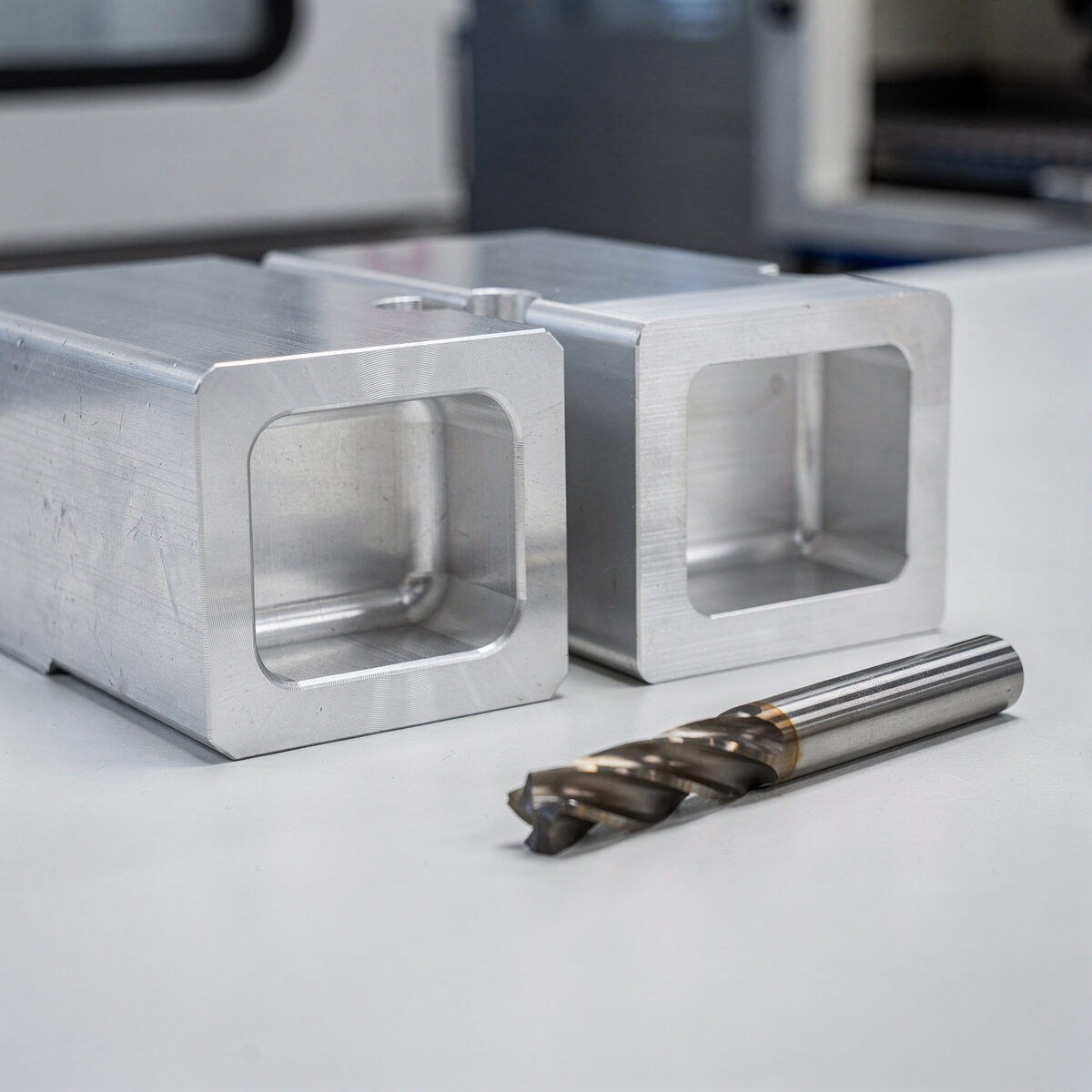
- Use internal corner radii matching standard end mills instead of near-sharp corners.
- Keep pocket depth within about four times the tool diameter where possible.
- Use standard thread sizes and avoid full-depth threads when partial engagement suffices.
- Group finish requirements so the whole part can be finished in one operation.
- Group features so they can be accessed from fewer orientations.
A design-for-manufacturing (DFM) review before ordering catches most of these. Changing a drawing is simpler than changing a fixture.
How Othala Handles a CNC Quote Request
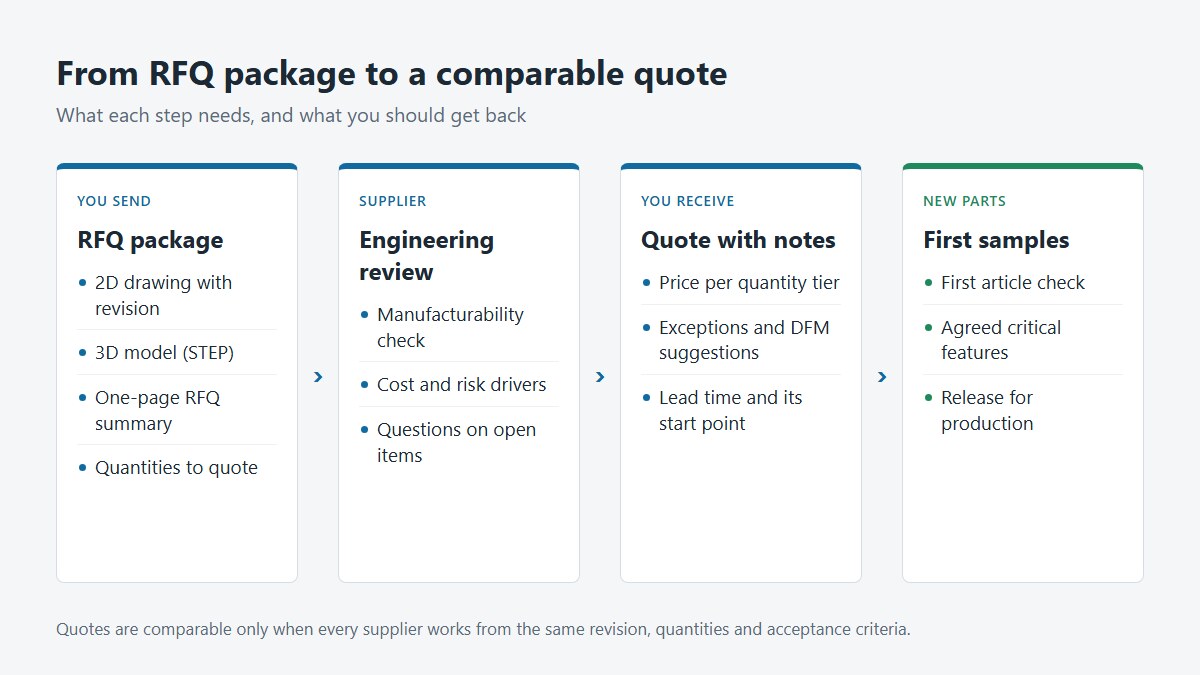
Our process follows the order of the checklist above. You share drawings, specifications, material, application, and target quantity. An engineer reviews manufacturability, flags cost-driving or high-risk features, and sends the quotation with DFM suggestions. For new parts, we can produce prototypes or initial samples for validation prior to full production.
Quality work operates under our ISO 9001:2015 and ISO 13485:2016 certified quality management system. Inspection is planned against the features and documents you specify to align with incoming inspection checks.
Frequently Asked Questions
How long does it take to get a CNC machining quote?
Timing depends primarily on package completeness. With a dimensioned drawing, 3D model, material, finish, and quantity, most simple parts are reviewed quickly. Missing tolerances, unclear finish requirements, or open material choices require a question-and-answer round before a firm price is possible.
Can I get a quote from a 3D model only?
You can receive an estimate, but a firm quote normally requires a 2D drawing. Unless the model carries complete product manufacturing information (PMI), it shows geometry only, not tolerances, thread classes, surface finish, datums, or inspection requirements. Without them, suppliers must make assumptions, which are priced conservatively.
Why is the unit price so high for one or two parts?
Programming, setup, fixturing, and first-part inspection remain largely identical whether producing one part or fifty. On small quantities, those fixed costs distribute over very few parts. Requesting prices at several quantities reveals where the curve flattens.
Does a tighter tolerance always cost more?
Not always, but typically. Holding a tighter tolerance may require slower finishing passes, an extra setup, temperature-stable measurement, or a CMM check. If a tolerance matters on a single bore, apply it there and maintain general tolerances across the rest of the part.
What file formats should I send?
A PDF drawing and a STEP file cover almost every case. IGES and Parasolid are also widely used. Native CAD files help, but neutral formats ensure quotes do not depend on matching software versions.
Conclusion
The fastest route to an accurate CNC machining quote is a complete, consistent package: a drawing with a revision letter, a 3D model, an exact material grade, clearly marked critical features, finish and inspection requirements, and realistic quantities. Most costs are determined by these inputs before metal is cut. If you are unsure which tolerances or features drive cost, request a DFM review with your quote to save time and expense.
Request a DFM Review
Need help evaluating the manufacturability of a precision CNC component?
Send us your 2D drawings, 3D models, material requirements, target tolerances, and expected production volume. Our engineering team reviews designs and provides practical recommendations for machining, inspection, and production. Start from our CNC machining services page or request a quote directly.