
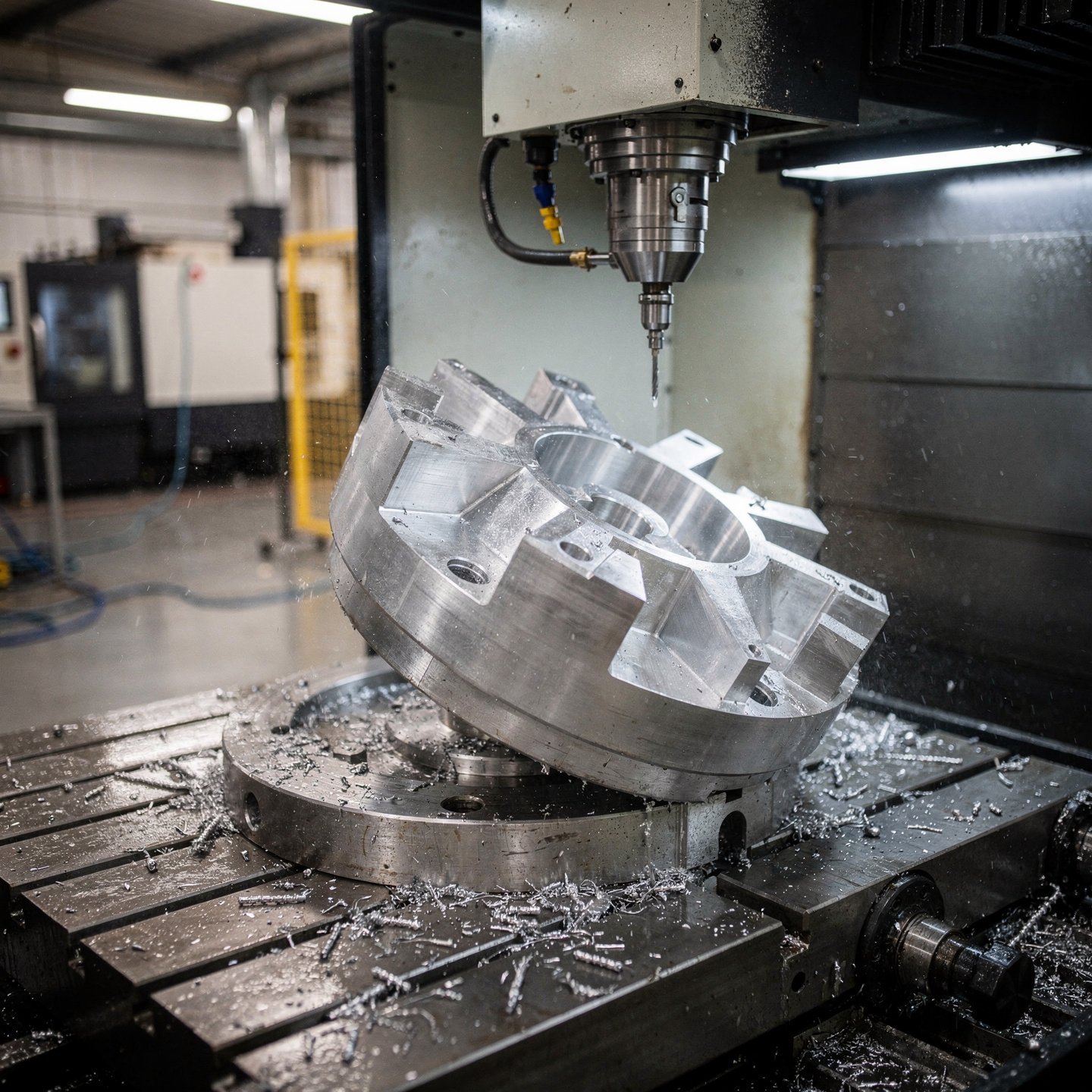
When a part’s geometry can’t be reached with a standard 3-axis mill — angled bores, contoured surfaces, features on multiple faces — 5-axis CNC machining is usually the answer. It lets the cutting tool and workpiece move along five coordinated axes at once, reaching complex geometry in a single setup instead of repositioning the part multiple times.
What Makes 5-Axis Machining Different
A standard 3-axis CNC mill moves the tool along X, Y, and Z. A 5-axis machine adds two rotational axes (commonly labeled A and B, or A and C, depending on the machine configuration), letting the tool approach the workpiece from nearly any angle. At Othala, our 5-axis CNC machining centers handle both linear and rotational motion simultaneously, so a part with features on several faces — angled holes, compound curves, undercuts — can often be finished without ever unclamping it.
Why Setup Count Matters
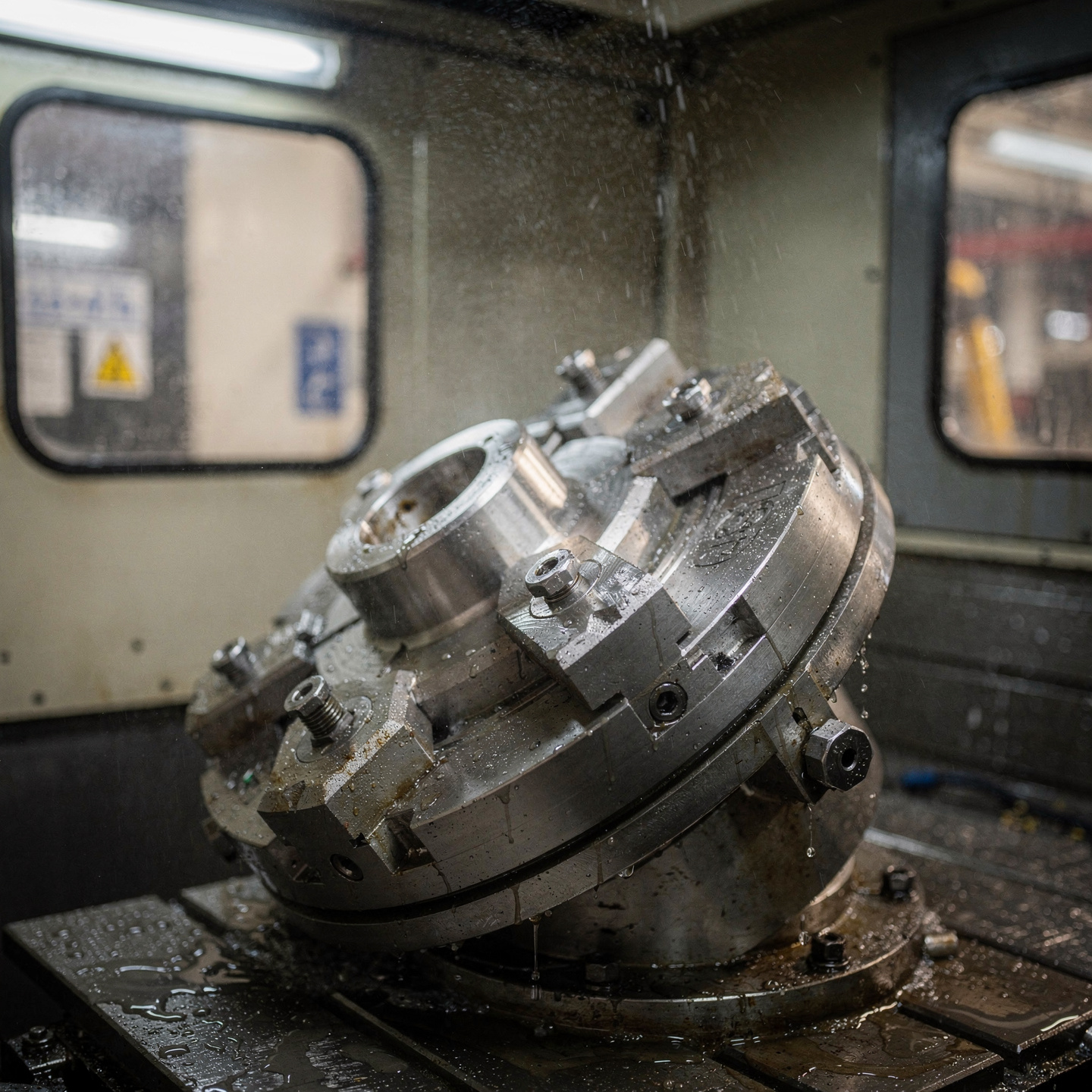
Every time a part is removed from a fixture and re-clamped, there’s a chance for small positional errors to creep in. A part that needs five separate 3-axis setups accumulates five opportunities for misalignment between features. Machining the same part in one 5-axis setup removes that stack-up entirely, which is one reason 5-axis work tends to hold tighter feature-to-feature tolerances than multi-setup 3-axis work on the same geometry.
Where 5-Axis Machining Is Actually Worth It
5-axis isn’t automatically the right call for every part — for simple prismatic geometry, a 3-axis mill is often faster and more cost-effective. 5-axis machining earns its cost premium when a part has:
- Compound angles or contoured surfaces that a 3-axis setup can’t reach without repositioning
- Tight positional tolerances between features on different faces
- Thin walls or delicate geometry that can’t tolerate multiple re-clampings
- Complex housings, impellers, or structural brackets common in aerospace, robotics, and medical device components
Materials and Tolerances
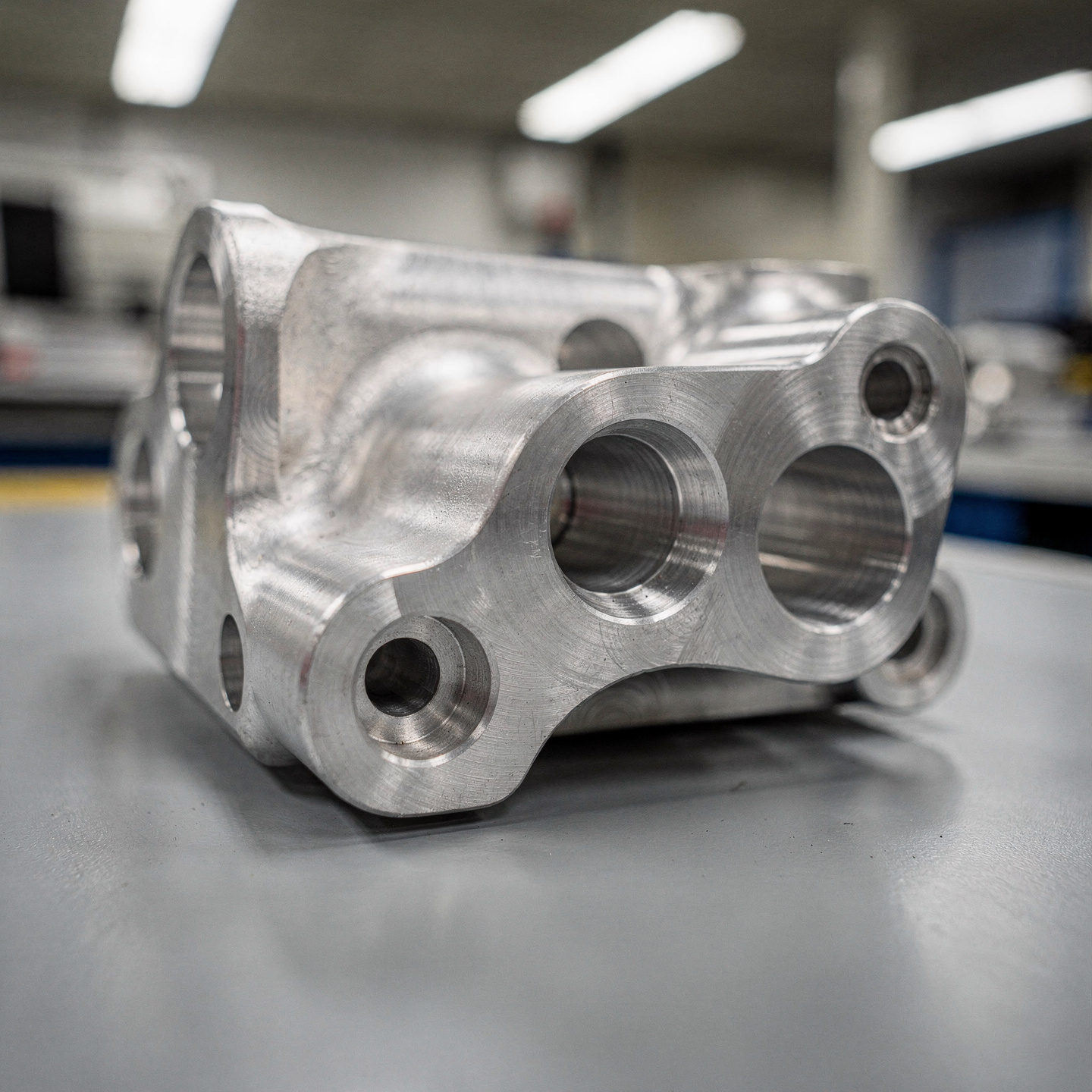
Othala’s 5-axis CNC machining supports the same range of engineering materials as our standard CNC services — aluminum, stainless steel, titanium and titanium alloys, and engineering plastics — with tolerances down to ±0.005 mm on standard features, and select 5-axis and EDM work capable of ±0.001 mm on critical features, subject to drawing, material, and process review.
Getting Started
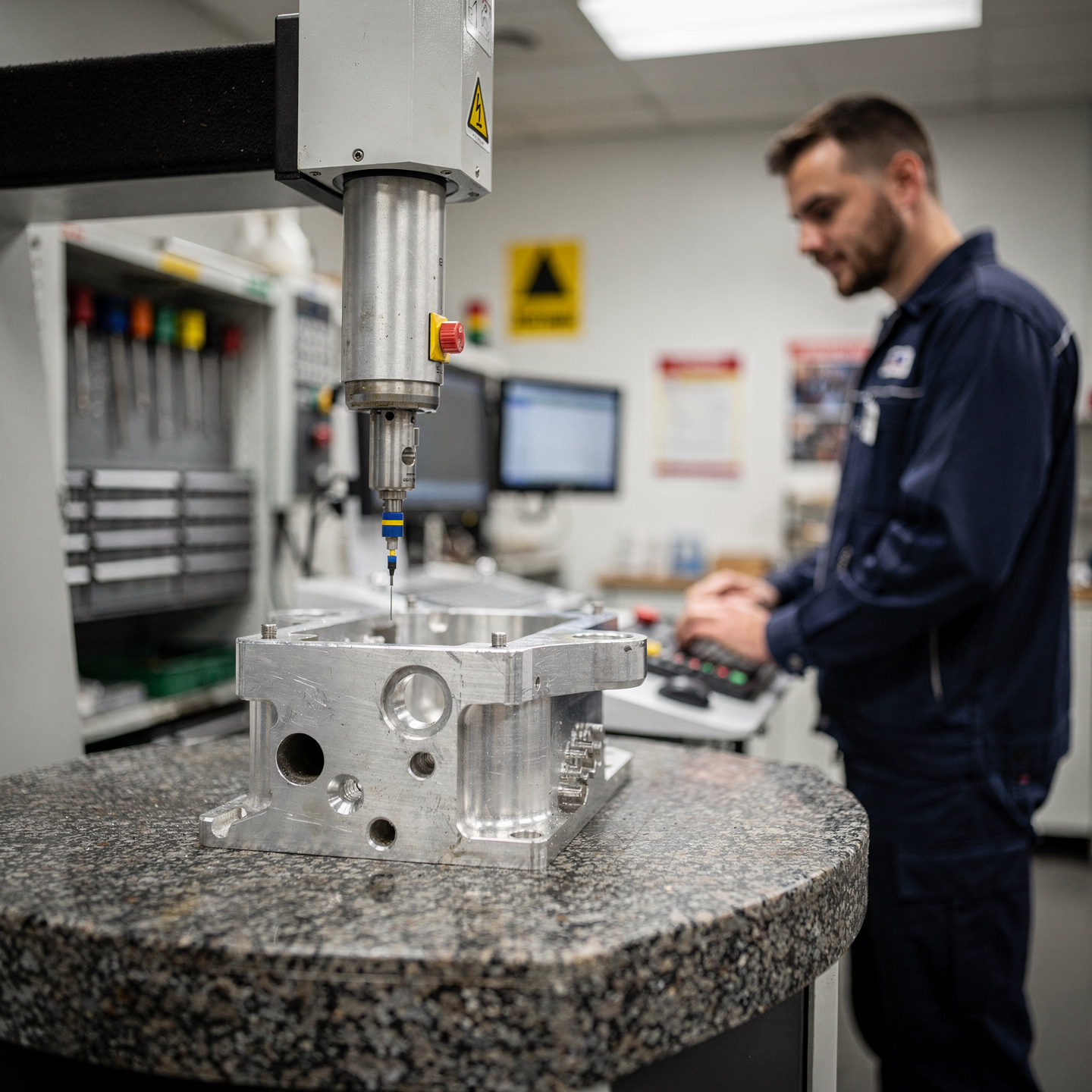
If you’re not sure whether your part actually needs 5-axis machining or would be better served by simpler 3-axis or turning operations, our engineering team reviews every drawing before quoting — as part of a standard design-for-manufacturability check, not an upsell. Upload your CAD files and drawings for a free DFM review and quote.