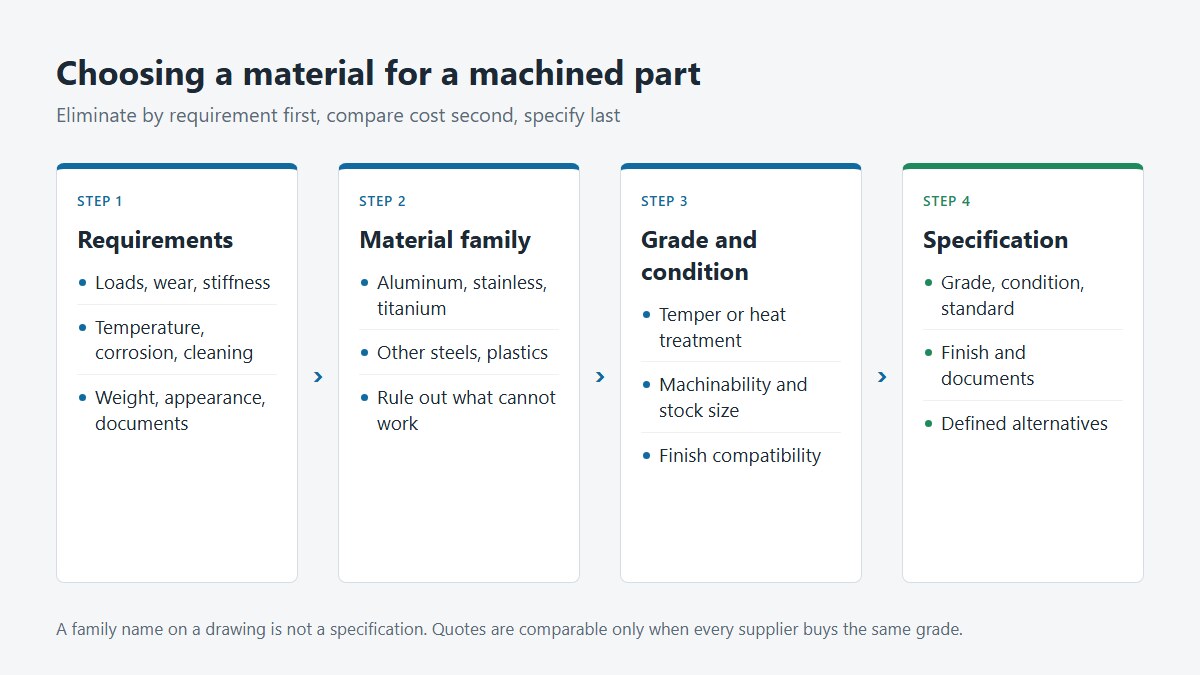
Choosing a material for a machined part is a sequence of eliminations. Start from what the part has to do and where it will live, rule out the material families that cannot do it, then compare the rest on machinability, cost, finishing and documentation. The last step is often skipped and causes the most trouble: writing the exact grade and condition on the drawing, so every supplier quotes and buys the same thing.
This guide walks through that sequence for the families most often machined: aluminum, stainless steel, titanium, other steels and engineering plastics. It does not replace the material manufacturer’s datasheet, and it does not list property values. Those depend on the grade, the condition and the test method.
Key Takeaways
- Start from function and environment: loads, wear, temperature, corrosion, weight, electrical and regulatory needs. Machinability comes later.
- Narrow to a material family first, then pick the grade. "Stainless steel" or "aluminum" on a drawing is not a specification.
- Specify the grade, the condition (temper or heat treatment), any finish, and the documents you need, such as a mill certificate.
- Machinability, stock form and finishing can change the part’s cost more than the raw material price does.
- A prototype in a substitute material proves fit, not the performance of the production material.
Step 1: Write Down What the Part Has to Do
Before comparing materials, list the requirements that actually decide the choice:
- Loads and stiffness. Static and cyclic loads, deflection limits, fatigue.
- Wear and contact. Sliding, rubbing, threads that are assembled repeatedly.
- Environment. Temperature range, moisture, chemicals, cleaning agents, sterilization, outdoor exposure.
- Weight. Whether mass is a design driver or only a cost.
- Electrical and thermal. Conductivity or insulation, heat dissipation.
- Appearance. Color, finish, whether the part is visible to the end user.
- Regulation and documentation. Food contact, medical use, material certificates, traceability requirements.
- Quantity and budget. Prototype quantities tolerate costly materials and long cycle times; production volumes often do not.
Usually two or three of these decide the family. The rest help choose between grades.
Step 2: Narrow to a Material Family
| If the main requirement is | Families usually considered | Watch out for |
|---|---|---|
| Low weight with good stiffness | Aluminum; titanium where strength and corrosion also matter | Aluminum’s lower wear resistance; titanium’s machining cost |
| Corrosion resistance | Stainless steel, titanium, some plastics | Stainless grades differ widely; check the actual environment |
| Strength and wear | Alloy and tool steels, hardened stainless | Heat treatment can move dimensions; plan finishing after it |
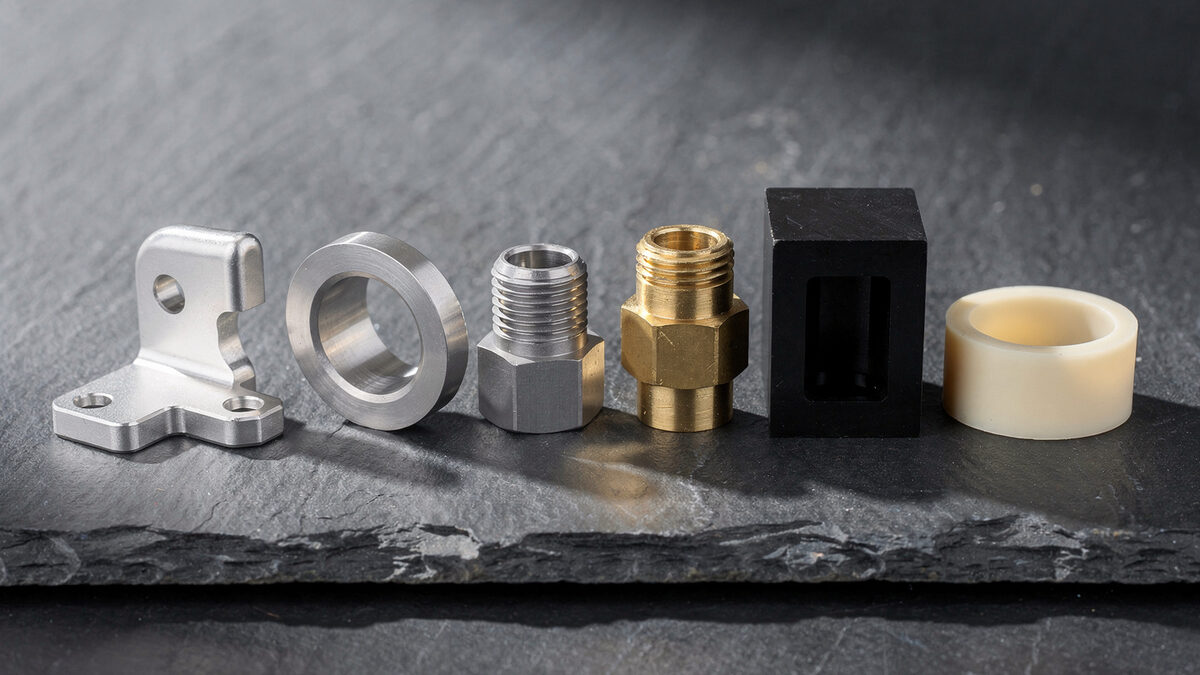
| Electrical insulation, low friction or chemical resistance | Engineering plastics such as POM, PEEK, PTFE, nylon | Moisture uptake, thermal expansion, creep under load |
| Thermal or electrical conductivity | Aluminum, copper alloys | Copper alloys are heavy and can be costly |
| Medical or implant use | Specified medical grades of stainless steel and titanium; Nitinol and cobalt-chromium for specialist parts | Grade, standard and documentation are part of the requirement |
Within each family the grades differ enough that the family alone settles very little. The next step is the grade.
Step 3: Choose the Grade and the Condition
Aluminum
Aluminum machines quickly, which keeps cycle times and cost down. Grades differ in strength, corrosion behavior and response to anodizing. Specify the alloy and the temper together, because the temper decides strength and stability. If the part will be anodized, say so at the quotation stage: anodizing adds a layer, changes appearance by alloy, and may need masking on threads and fits.
Stainless steel
Stainless steels range from free-machining grades to grades chosen for corrosion resistance or for hardening. Many austenitic grades work-harden, so they need sharp tools and steady cutting. Martensitic and precipitation-hardening grades can be heat-treated for strength and hardness, which affects the order of operations. Specify the grade, the heat-treatment condition and any passivation. Finish options are compared in our stainless steel surface finishes guide.
Titanium
Titanium combines low weight, strength and corrosion resistance. It conducts heat poorly, so heat stays at the cutting edge, which limits cutting speed and increases tool wear. Expect longer cycle times than aluminum. Specify the grade and stock condition, and for medical work the applicable material standard.
Other steels
Carbon and alloy steels are economical and strong, and they can be hardened. Most need a coating or plating to resist corrosion. If hardness is specified, agree whether features are finished before or after heat treatment.
Engineering plastics
Plastics are chosen for insulation, low friction, chemical resistance or low weight. They move more with temperature than metals, some absorb moisture, and internal stress can cause distortion after machining. Specify the supplier grade, not only the polymer name, and agree the condition in which dimensions are measured.
Step 4: Check Machinability, Cost and Finishing
Two materials that both meet the requirements can lead to very different quotes.
- Machinability. Hard, tough or heat-retaining materials need slower cutting and more tool changes. Free-cutting grades shorten cycle times.
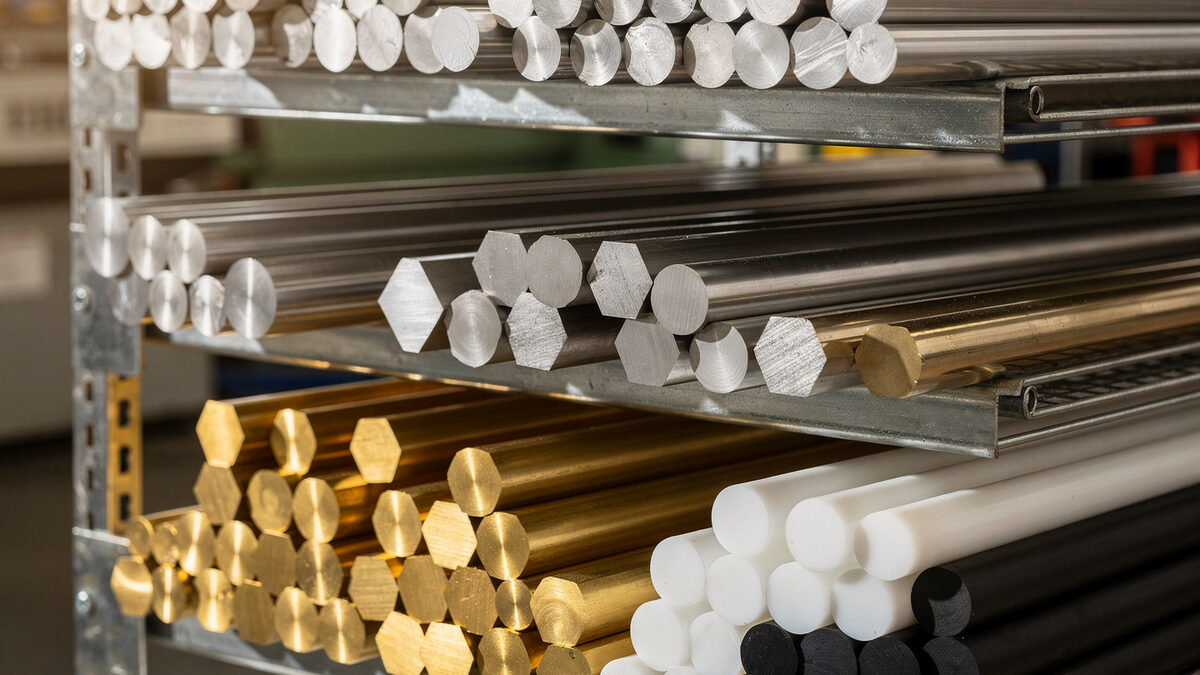
- Stock form. A part that fits within a standard bar or plate size wastes less material. Unusual sizes may need a larger stock size or a special order.
- Availability. Common grades are easier to source quickly. Special grades can have minimum order quantities or long lead times; ask before you commit.
- Finishing. Anodizing, passivation, plating, heat treatment and polishing each add steps. Some finishes only work with certain alloys.
- Scrap value and waste. Expensive materials make material removal costly. A near-net blank can pay off in production.
When you ask for quotes, it can help to name an acceptable alternative grade. A supplier can then quote both and show the difference.
Step 5: Write the Specification
A clear material callout on the drawing or in the RFQ removes most of the ambiguity. Include:
| Item | Example of what to write |
|---|---|
| Material family and grade | Aluminum 6061, stainless 316L, titanium Grade 5, POM-C |
| Condition | Temper or heat-treatment condition, hardness if required |
| Standard | The material standard the stock must meet, where one applies |
| Finish | Anodize type and color, passivation, plating, or "as machined" |
| Documents | Mill or material certificate, certificate of conformity, lot traceability |
| Permitted alternatives | "Or equivalent" only if you define what equivalent means |
The examples show the format. Choose the grade from your own requirements and the material supplier’s data.
Prototype Materials Versus Production Materials
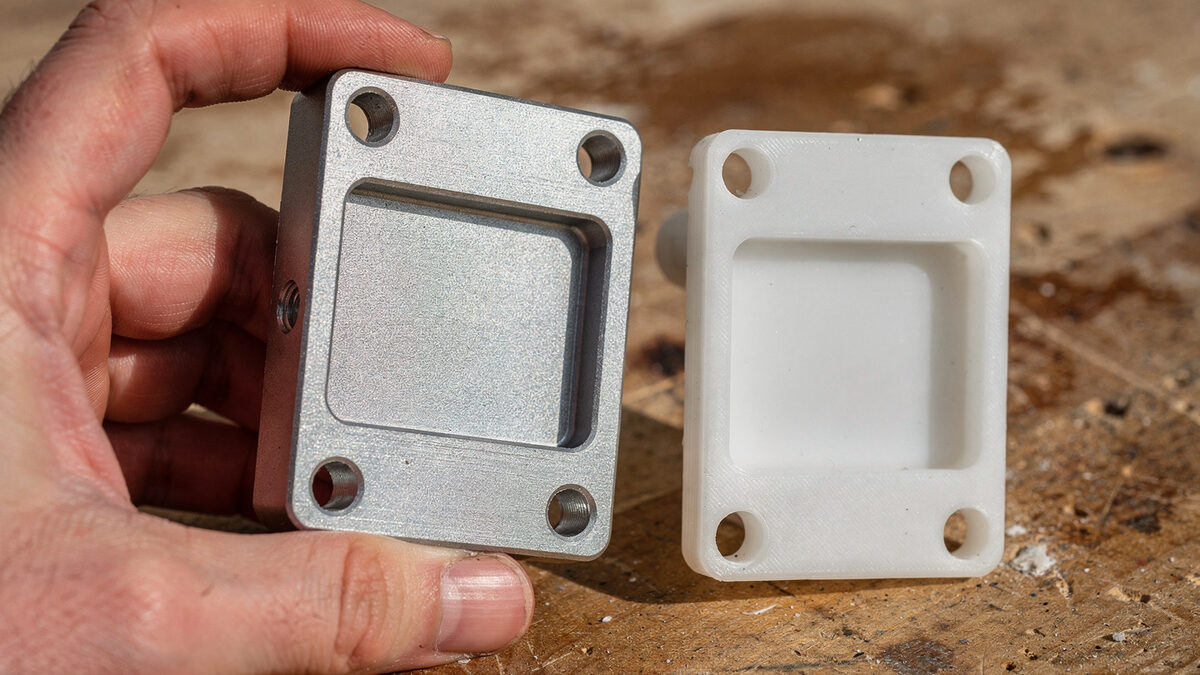
Prototypes are often machined in a convenient material to check form and fit. That is useful, but it does not prove how the production part will perform if the production material or process differs. A machined prototype in one plastic says little about a molded production part in another resin, and an aluminum mock-up says little about a titanium part’s fatigue life. Record what each prototype was made from and keep functional testing for the production material.
Common Mistakes
- Specifying only the family. "Aluminum" or "stainless" lets each supplier choose a different grade, and the quotes stop being comparable.
- Ignoring the condition. The same alloy in a different temper or heat treatment behaves differently.
- Choosing on raw material price. A cheaper material that machines slowly or needs extra finishing can cost more per part.
- Forgetting the finish. Anodizing, plating and passivation can change dimensions and appearance, and some do not suit every alloy.
- Assuming plastics behave like metals. Thermal expansion, moisture and stress relief need their own tolerancing and inspection plan.
How Othala Approaches Material Selection
We review material requirements with the drawing and the application before quoting. Where a grade, condition or finish is missing or unclear, we ask, and where a different grade would reduce cost or risk without affecting function, we say so in the quote. When an order requires material certificates or lot traceability, we agree them with the order. Our quality management system is certified to ISO 9001:2015 and ISO 13485:2016.
For material families, grade questions and molded-resin considerations, see our CNC material selection page.
Frequently Asked Questions
What is the most common material for CNC machining?
Aluminum is among the most commonly machined materials because it machines quickly and has a good strength-to-weight ratio. Stainless steel is common where corrosion resistance or strength matters. The right choice depends on the part’s function and environment, not on popularity.
Is titanium always better than stainless steel?
No. Titanium is lighter for its strength and resists corrosion well, but it costs more to buy and to machine. Stainless steel is often the better choice when weight is not a driver. See titanium vs steel for a fuller comparison.
Can plastics be machined to the same tolerances as metals?
Plastics move more with temperature and some absorb moisture, so tight tolerances are harder to hold and to measure consistently. Tolerances should reflect the material, and the measurement condition should be agreed.
Should I accept "or equivalent" materials?
Only if you define what equivalent means: the properties, standard or documents that must match. Otherwise substitutions are hard to evaluate.
What material documents should I ask for?
For most industrial parts, a material certificate from the mill or stock supplier and a certificate of conformity are common. Regulated parts may need lot traceability and additional records. List the documents in the order.
Conclusion
Choose the material from the part’s function and environment, narrow to a family, then select the grade and condition and write them on the drawing with the finish and documents you need. Compare machinability and finishing as part of the cost, and keep prototype materials separate from production decisions. A clear specification makes quotes comparable and parts consistent.
Request a DFM Review
Not sure which material or grade fits your part?
Send us your drawing, 3D model, application, environment and quantities. Our engineering team can review the material choice alongside machinability, finishing and cost. See our CNC machining services or request a quote.