
Working with aerospace-grade metal leaves no room for shortcuts. Precision fabrication requires advanced CNC cutting, bending, and forming of specialized alloys. Materials such as titanium, aluminum, and stainless steel are frequently utilized due to their exceptional strength-to-weight ratios and natural corrosion resistance. In aerospace component machining, strict accuracy is critical because even minor structural defects pose significant operational risks.
Whether manufacturing parts for commercial jets or defense aircraft, the quality of sheet metal fabrication remains a fundamental concern. Custom sheet metal fabrication supports overall flight reliability and structural integrity. Driven by technological advancements, modern fabrication processes are highly efficient, delivering improved part consistency, reduced component weight, and minimal material waste. This guide explores the essential techniques, materials, and critical considerations involved in aerospace sheet metal fabrication.
Let’s get started!
What Is Aerospace Sheet Metal Fabrication?
Aerospace sheet metal fabrication is the highly controlled process of forming raw metal into specialized aircraft components. Manufacturers shape industrial alloys into exact geometric pieces designed to be exceptionally lightweight yet strong enough to withstand the mechanical stresses of flight. Employing these advanced manufacturing processes ensures that finished aircraft operate safely and efficiently.
Engineers frequently develop initial prototypes using aluminum or titanium, as both metals provide excellent structural rigidity while remaining surprisingly light. The fabrication process relies on a comprehensive suite of precision tools to cut, press, and form the metal sheets. Crucially, every operation within this manufacturing workflow is governed by strict aerospace industry regulations to ensure compliance.
Fabricated sheet metal reinforces the primary structures and internal systems of an aircraft. The process is used to manufacture everything from exterior skin panels and structural brackets to internal ducts and precision mounting pieces. Once deployed, these fabricated parts must reliably withstand severe operational stresses, including extreme heat, mechanical force, and intense aerodynamic pressure.
Common Materials Used in Aerospace Sheet Metal Fabrication
Selecting the appropriate material is a critical engineering decision in aerospace fabrication. A qualified material must be lightweight, mechanically tough, and highly resistant to thermal stress. Furthermore, these materials must consistently meet strict safety and reliability standards. Below are the metals most frequently utilized in this demanding sector.
Aluminum Alloys
A significant portion of aerospace sheet structures relies on aluminum due to its low weight and natural corrosion resistance. Specifically, the aluminum alloys known as 2024 and 7075 offer an excellent strength-to-weight ratio for flight applications. Furthermore, aluminum is highly machinable, allowing manufacturers to shape and form accurate components efficiently.
Titanium Alloys
Titanium is exceptionally tough and maintains its structural integrity at elevated temperatures. Engineers typically specify titanium for high-stress airframe zones or components exposed directly to engine heat. While its raw material cost is comparatively higher, it remains the optimal choice for vital structural elements. Additionally, titanium offers outstanding resistance to chemical and moisture-based corrosion.
Stainless Steel
Stainless steel provides immense tensile strength and a highly durable surface. It is frequently utilized in high-pressure fluid systems and heavy-duty structural brackets. Although it is specified less often than aluminum or titanium due to its weight, stainless steel remains highly dependable. It also provides strong resistance to environmental rust and mechanical stress cracking.
Inconel and Nickel Alloys
Inconel and other specialized nickel alloys are engineered specifically for extreme thermal environments. Manufacturers utilize these metals for components positioned directly around engines or exhausts. These alloys can support heavy mechanical loads while enduring extreme fluctuations in temperature and pressure. However, machining nickel alloys is inherently more challenging and tooling-intensive than processing standard aerospace metals.
Magnesium Alloys
Magnesium alloys weigh significantly less than aluminum and feature excellent formability, making them highly desirable for weight-sensitive aircraft designs. These alloys are typically found in internal structural assemblies and non-critical cabin components. Manufacturers must handle magnesium with extreme care during machining due to its flammability risks. Despite this challenge, its application successfully drives substantial weight reduction across the aircraft.
Sheet Metal Techniques for Aerospace Fabrication
Aerospace fabrication relies on highly precise manufacturing techniques to ensure component safety. Each method is carefully selected to shape the metal while preserving its inherent strength and mechanical performance. Utilizing the proper techniques helps engineers meet strict design requirements and stringent weight limits. Below are the core fabrication methods utilized in the aerospace industry.
Laser Cutting

Laser Cutting Sheet Metal
The fabrication process generally begins by cutting raw metal sheets into flat component profiles. Advanced CNC laser cutting machines and precise waterjet systems are used to make these exacting cuts. These automated tools follow digital drawings with high repeatability. Producing parts with consistently clean edges ensures accurate fitting and secure joining during later assembly stages.
Bending
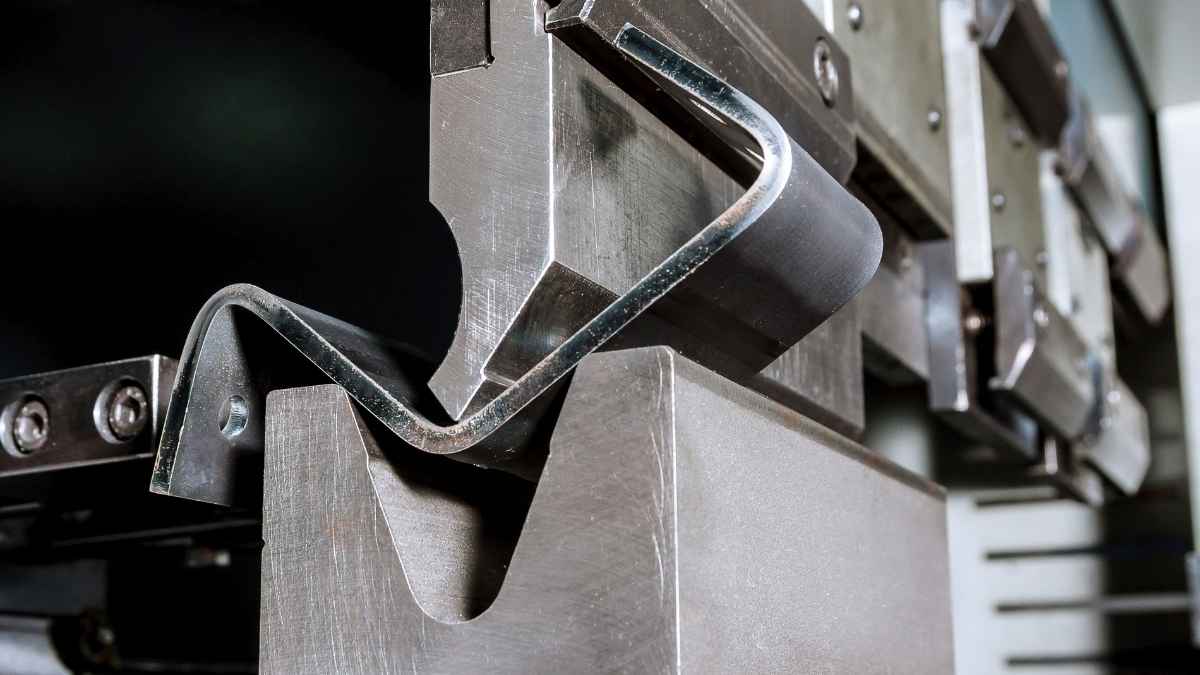
Sheet Metal Bending
Following the initial cutting phase, metal sheets are bent to achieve the necessary dimensional angles. Heavy-duty press brakes apply calculated mechanical force to form these precise structural bends. Machinists must strictly follow the correct bend radii designated for each specific metal alloy, as an improper bend can severely weaken or structurally damage the component.
Forming
Forming transforms flat metal sheets into complex, three-dimensional geometries. Manufacturers utilize custom dies, mechanical punches, or advanced hydroforming presses to achieve these contours. This specific process is critical for creating aerodynamic skin panels, internal ducts, and smoothly curved structural parts. Maintaining smooth, continuous shapes is essential to minimize aerodynamic drag and air resistance during flight.
Joining
Individual components are securely assembled using industrial rivets, precision welds, or specialized aerospace fasteners. Riveting remains the most common joining method for assembling primary aircraft structures. Additionally, high-strength industrial adhesives are frequently used to bond complex composite-metal joints. Regardless of the method, every structural joint must be exceptionally strong while minimizing added weight.
Finishing
Manufacturers apply specialized surface finishes to protect the bare metal from environmental damage. Processes such as anodizing, metal plating, or the application of chemical conversion films provide critical barriers against corrosion. Certain surface finishes also promote paint adhesion or actively reduce mechanical friction on moving parts. Ultimately, proper finishing significantly improves the component’s operational lifespan and overall flight safety.
Tools and Equipment Used in Aerospace Sheet Metal Fabrication
Fabricating aerospace-grade sheet metal requires specialized industrial equipment. These advanced tools enable manufacturers to accurately cut, mold, bend, and join complex airframe components. Selecting the appropriate machinery ensures workplace safety, delivers highly precise dimensional results, and preserves the metallurgical quality of the base materials. The following section details the primary equipment utilized in this manufacturing process.
CNC Laser Cutting Machines
Manufacturers rely heavily on CNC laser cutting machines to generate exact geometric profiles from sheet stock. These systems depend on precise digital CAD plans to execute highly accurate toolpaths. Laser cutters operate rapidly and cut through thin materials without causing physical distortion or bending. By utilizing CNC lasers, fabrication shops significantly reduce material waste and ensure consistent part uniformity across production runs.
Sheet Metal Brakes
Press brakes are essential for accurately bending metal sheets to highly specific angles. This equipment makes it possible to form consistent, clean structural bends across large metal components. In aerospace manufacturing, bent parts must be precise and free of cracking along the stress line. Even a minor deviation in the bend radius can lead to significant assembly issues or compromise the aircraft’s structural safety.
Hydroforming Presses
Hydroforming presses are the preferred solution for shaping complex, deeply curved metal geometries. This specialized equipment utilizes highly pressurized hydraulic fluid to smoothly form thin sheet metal against a customized die. Hydroforming is highly effective for creating seamless aerospace components that require exceptional aerodynamic performance. Manufacturers frequently use this process to fabricate intricate fuselage panels and internal ducting components.
Riveting and Fastening Solutions
Pneumatic rivet guns and precision aerospace drills are essential tools during the final assembly phase. Industrial rivets securely connect structural panels while adding minimal weight to the airframe. A typical aircraft structure relies on many thousands of these individual rivet joints to maintain its integrity. Once installed, these structural connections should be snug, straight, and free of visible defects.
Measuring Instruments
Utilizing highly accurate measuring instruments allows machinists to verify that components remain within strict engineering tolerances. Quality control departments rely heavily on digital calipers, specialized gauges, and advanced laser scanners to validate part dimensions. Because aerospace components allow for very little dimensional variance, these precision inspection tools are integrated into every step of the production cycle.
Key Considerations in Aerospace Sheet Metal Fabrication
Successful aerospace manufacturing requires meticulous planning at every production stage. Every fabricated component must deliver reliable strength, rigorous accuracy, and certified quality. Below are the critical engineering factors manufacturers must consider during the fabrication process.
Material Selection
Engineers must select materials that provide an optimal balance of structural strength and low weight. This requirement is why aluminum and titanium are so frequently chosen for airframe components. These advanced metals can withstand intense operational heat while resisting environmental corrosion. Utilizing an inappropriate or substandard alloy could ultimately lead to catastrophic system failure.
Tolerance Control
Strict tolerance control is a non-negotiable requirement in aerospace fabrication. Machinists must adhere to highly restrictive engineering specifications throughout the entire manufacturing run. Even slight dimensional mistakes can cause critical parts to fit improperly during final assembly. Manufacturers ensure compliance by utilizing calibrated inspection tools to continuously verify dimensional limits.
Thermal Behavior
Aircraft components are subjected to extreme temperature fluctuations during a typical flight cycle. Engineers must carefully calculate how specific materials will expand or shrink when exposed to these thermal shifts. Failing to account for this thermal behavior can lead to severe structural stress cracks. Consequently, designers must select metals that maintain stable mechanical properties across a wide temperature range.
Weight Reduction
Every added gram directly impacts fuel efficiency and the aircraft’s performance. Because lightweight construction is vital to aerospace engineering, manufacturers design and cut parts with extreme care. Achieving low-mass designs often involves utilizing hollow structural shapes and minimizing unnecessary overlapping joints. However, this aggressive weight reduction must be accomplished without sacrificing the component’s required mechanical strength.
Certification and standards
Aerospace facilities must comply with rigorous industry regulations and undergo regular certification audits. These strict standards govern raw material sourcing, manufacturing methodologies, and final product inspection. Approved parts must be thoroughly documented and tested to ensure they meet established flight safety standards. Without maintaining these essential certifications, a facility cannot legally supply components for aerospace production.
Final Thoughts
Aerospace sheet metal fabrication is a highly precise and technically demanding manufacturing discipline. It requires operating advanced industrial tools and processing rigorously tested aerospace materials. Most importantly, every fabricated component must reliably meet strict aviation flight standards.
Manufacturing decisions made on the shop floor directly affect an aircraft’s safety, speed, and overall efficiency. From the initial cutting to the final surface finishing, every dimensional detail matters. Utilizing the correct fabrication techniques ensures reliable mechanical success once the aircraft is in the air.
When executed correctly, this highly controlled process builds much more than individual metal parts. It establishes the foundational performance, structural reliability, and operational trust required for modern aerospace systems.