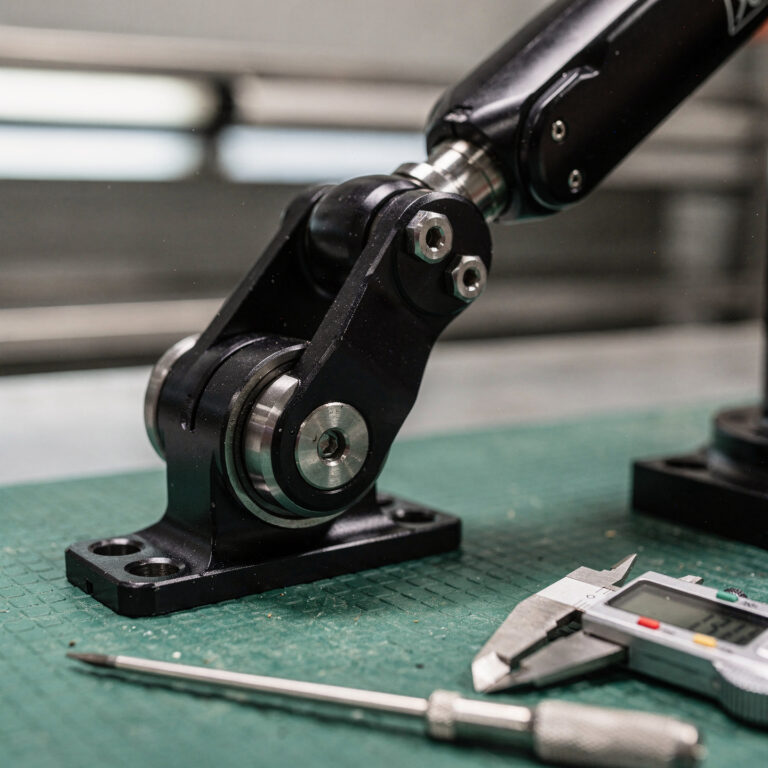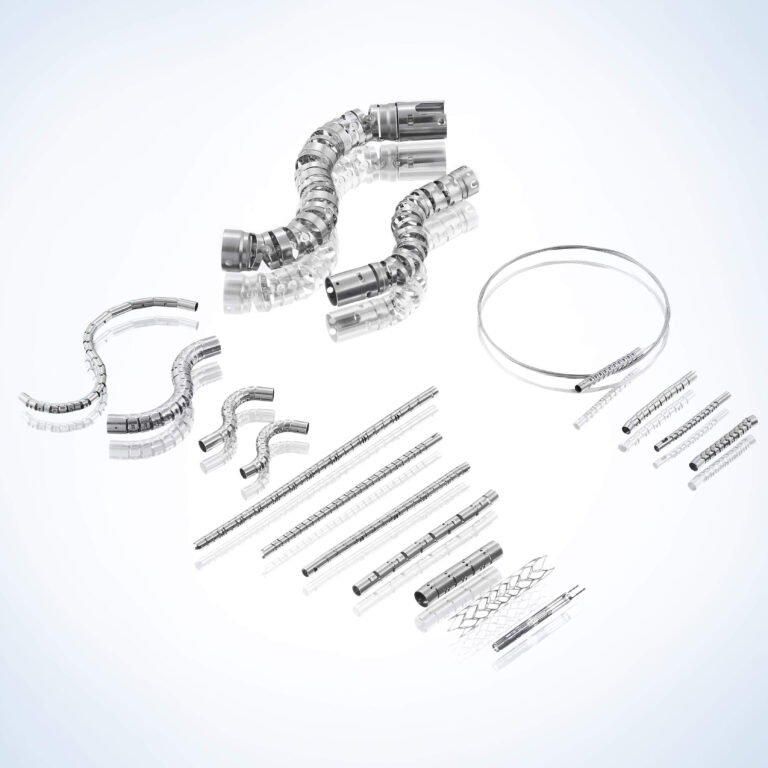
Surgical robots are trusted to assist in life-saving procedures, meaning every movement they make must be clean, stable, and exact. There is no tolerance for wobbling or slipping when these machines operate millimeters away from delicate tissue. At the heart of that precision are the robot’s joints—precision-machined parts built for stable, repeatable performance. Each joint controls a specific segment of the robot’s arm or instrument. When a surgeon moves, the robot mimics that action with a level of stability the human hand simply cannot replicate. Behind that movement lies a complex system of gears, shafts, actuators, and sensors, each engineered to tight tolerances. In surgical robotics, these machined components are more than just mechanical links; they are the core of control, accuracy, and trust. Let’s look deeper into the details of precision-machined surgical joint parts.
How Precision-Machined Joint Parts Are Manufactured?
The manufacturing process behind these joint components involves rigorous engineering. The requirements demand strict tolerance levels, leaving very little margin for error. Consequently, all parts must be produced using cutting-edge techniques and state-of-the-art machining centers. The creation process for precision-machined surgical robot joint components generally follows these steps.
CNC Machining
The production process begins with solid blocks of titanium, stainless steel, or specialized medical-grade alloy. A Computer Numerical Control (CNC) machine performs the initial shaping operations. Driven entirely by digital instructions rather than manual guesswork, the machine cuts and refines surfaces down to fractions of a millionth of a meter. For rotary joints, multi-axis CNC mills manufacture the intricate internal gears, ensuring each tooth receives precise dimensional and angular machining. The production of prismatic joints requires long, exceptionally smooth shafts, which are created using precision linear milling tools. Furthermore, CNC machines cut bearing housings of all sizes to exact circular dimensions. This automated method yields highly repeatable and reliable results, ensuring the first component in a batch possesses the exact specifications as product number 1,000.
EDM (Electrical Discharge Machining)
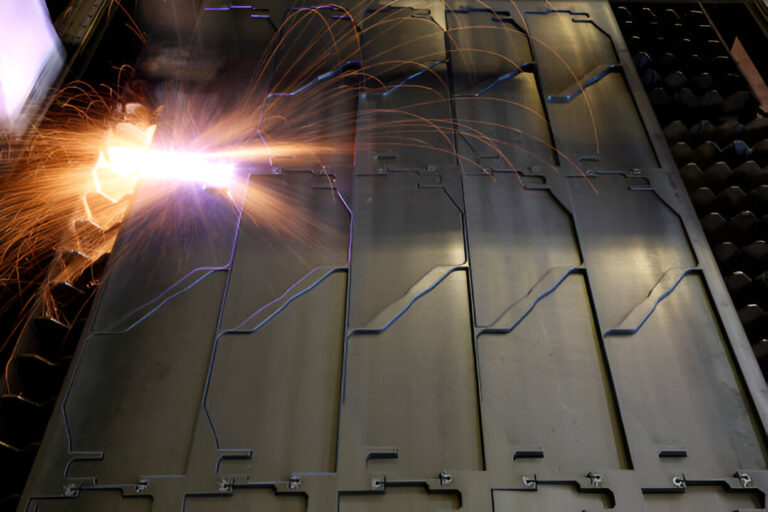
The intricate design features of these components often make them impossible to cut using conventional tooling. That is where Electrical Discharge Machining (EDM) becomes essential. This method utilizes electrical sparks to erode and shape hard metals. EDM serves as the ideal technique to produce tight internal cuts, sharp corners, and highly detailed features with minimal tolerances. For example, machining a gear with a complex curved internal groove requires specialized attention, as a standard drill cannot achieve a clean cut. The EDM process creates precise shapes in these materials without the tool ever making physical contact with the workpiece. While EDM is a slower process, accuracy always takes priority over speed in surgical robotics. It provides the ultimate solution for creating complex joint geometries that standard milling or turning operations simply cannot achieve.
Precision Grinding and Polishing
Even after the primary cutting operations are complete, the machined parts remain unfinished. You need very smooth surfaces for optimal mechanical function. High-speed CNC grinders are utilized to smooth down any rough areas left from the initial milling process. Subsequently, ultra-fine polishing techniques are applied to produce a highly reflective mirror finish. This polishing step is critical because rough surface textures generate friction. If friction causes wear, heat, and vibration, the surgical joint will rapidly deteriorate. Therefore, all shafts, bearing seats, and guide rods require exceptionally smooth and uniform dimensions. Additionally, highly polished surfaces resist biological contamination, allowing these top-quality joint components to meet the strict cleaning and safety requirements of the surgical field.
Additive Manufacturing for Custom, Complex Geometries
While many manufacturing processes start directly from raw solid blocks, some components are constructed using additive manufacturing technology, which builds parts layer by layer. The advanced design capabilities of 3D printing allow engineers to create hollow sections and highly intricate internal structures for joint assemblies. In this approach, a specialized laser melts titanium-based metal powders, building the part upward from the base to replicate the digital design exactly. Once formed, these components undergo heat treatment, precision machining, and final polishing to meet their required specifications. Complex ball-and-socket systems, as well as modular, lightweight joint assemblies, frequently utilize these additive parts. Because they are designed for compact operating rooms, these surgical components seamlessly integrate high mechanical strength with lightweight characteristics. Finally, comprehensive testing of every manufactured part remains a compulsory requirement before any component leaves the facility.
Quality Control: No Part Leaves Without Testing
Each manufactured part then proceeds to a rigorous inspection procedure. The precision fabrication process involves detailed laser scanning alongside X-ray imaging to verify that all internal and external dimensional parameters are met. If a component is even slightly out of specification, it is immediately rejected. The entire set of machined components undergoes strict alignment testing. Every bearing housing is meticulously measured, and advanced tolerance gauges are used to determine the acceptance of every single shaft. The ultimate goal is to ensure the complete robotic system functions reliably and exactly as expected by the surgical staff.
Surface Coating Minimizes Wear Patterns
Robotic joints must operate in demanding environments characterized by excessive heat, fluid exposure, and sustained mechanical pressure. To protect these precision parts, specialized surface coatings are applied during the final manufacturing stages. The components receive advanced treatments that include ceramic coatings, hard-anodized shells, and low-friction polymers. These applied coatings actively minimize mechanical wear, reduce internal friction, and protect the underlying metal against corrosion. Furthermore, certain coatings provide antimicrobial properties to the component’s surface, offering an extra layer of protection to safeguard the sterile environments of the operating room.
What Makes Surgical Robot Joints So Special?
Surgical robotics require human-like motion without human physical limitations. While natural human wrist, elbow, and shoulder joints operate fluidly, they eventually demonstrate signs of physical exhaustion through subtle shaking and fatigue. Robotic joints aim to replicate these human motion capabilities but with greatly enhanced consistency. These mechanical joints require highly precise movement characteristics to execute bending, rotating, and flexing operations accurately. The mechanisms must perform thousands of repetitive movements with minimal deviation.
To achieve this, engineers design joint components that operate at a precision level of microns. CNC machines fabricate the critical segments and internal gearing components, while the bearings undergo strict calibration to ensure motion remains smooth and frictionless. These are not standard, off-the-shelf parts. Instead, the design team engineers these components to exclusive specifications tailored exactly to the robot’s operational needs, including specific force output limits and complex motion patterns.
Types of Surgical Robot Joints
Rotary Joints: Controlled Circles, No Slip Allowed
Most robotic surgical arms depend on rotary joints as their primary operational components. The robotic limb or tool rotates similarly to a human shoulder or wrist, though it relies on fixed-axis mechanical movement. While these joints mimic human articulation, they operate entirely without tremors, physical resistance, or muscular exhaustion.
These rotary joints consist of precision-machined gears coupled directly with drive motors and digital encoders. During manufacturing, the gear teeth are cut with exact positioning to eliminate any undesired looseness or backlash. Even a slight geometric imperfection on a gear assembly could translate into substantial errors during a medical procedure. Advanced CNC cutting technology and 5-axis milling systems make the reliable manufacturing of these intricate gears possible, consistently holding tolerances that are often under 10 microns.
Inside the machined housing, high-efficiency motors convert electrical signals into smooth, controlled physical motions, while integrated devices continuously track speed and torque measurements. The outer casing is manufactured to maintain complete seal integrity, ensuring the internal mechanisms resist fluids, harsh sterilants, and high heat.
Prismatic Joints: Straight-Line Control With Surgical Accuracy
Not all robotic motion is circular. Certain joints function by extending or retracting in a direct line. These prismatic joints provide robotic functionality through a steady, linear force, behaving much like a precision piston during pushing and pulling movements.
To operate effectively, these joints rely on precision-machined linear rails and mechanical screw drives. The inner mechanisms contain specially tailored guide rods and drive motors that turn the screws, allowing the components to slide smoothly. These machined parts utilize protective surface coatings to fight against mechanical wear and incorporate tight seals to block surgical debris from entering the housing.
This design provides exact control over the tool’s extension. Prismatic joints can make precise positional adjustments to surgical instruments and cameras without causing unintended shifts or unwanted shaking. Every linear extension is accurately measured, and every retraction is consistently smooth. The reliable straight-line movement observed in the operating room is a direct result of the exact machining processes used to create the device’s internal components.
Sensors: Making Every Joint Smart
A surgical robot requires constant spatial awareness. Its joints must possess the capability to continuously monitor force, speed, angle measurements, and overall positional status. To achieve this, every segment of the robot’s joint assembly houses highly sensitive sensors. Force sensors measure the intensity of the tool’s pressure during operations, torque sensors monitor physical resistance, and optical encoders capture real-time rotation and extension data.
These sensors are integrated directly into the machined joint structure, positioned precisely between gears, along drive shafts, or mounted within the outer housing. Because these devices must endure vibration, heat exposure, and rigorous cleaning operations, each sensor is seated within its own precision-machined cavity. This tailored cavity provides essential shock protection and structural sealing.
This integrated combination of sensors establishes critical feedback loops that transform basic motor motion into intelligent, responsive operation.
The objective extends far beyond simply moving the robotic arm; the system must display highly responsive, adaptive behavior. Feedback loops make this possible by transferring immediate telemetry data to the main controller while the joint operates. For instance, if external pressure heightens unexpectedly, the robotic mechanism can automatically reduce its speed or adjust its position to compensate for a slipping tool.
This built-in protection system helps prevent inadvertent surgical damage. By detecting physical hazards and resistance spikes early, the robotic system can adjust its movements instantly to maintain a safe operating environment.
Ball-and-Socket Joints: Complex Angles, Simplified
Certain surgical procedures require fluid movement in multiple directions simultaneously, necessitating the robot to rotate, tilt, and pivot seamlessly. Ball-and-socket-inspired joints provide this level of complex control. These joints are constructed from precision-machined spherical bearings and multi-axis pivot mounts. The ball fits precisely into a socket, granting it the necessary freedom to articulate while maintaining exceptionally tight mechanical control. To prevent drift or unintended shifts during surgery, each component is machined to nest together tightly. The crucial angles are cut with advanced laser tools, ensuring there are no rough edges or loose gaps. Actuators placed strategically around the socket apply force in specific vectors, while integrated sensors track movement across all axes. This advanced design allows the surgeon to position a surgical tool at the intended angle securely, without requiring constant manual readjustment.
Precision Machining: Why Details Can’t Be Missed
While many industries can accept “close enough” manufacturing standards, robotic surgery requires strict, uncompromising precision. Robotic surgery leaves little tolerance for deviation, so every dimension matters. The components undergo advanced cutting and drilling processes that create highly precise surface finishes. Automated checks function continuously during the CNC machining operation, while laser scanners conduct thorough inspections to identify any dimensional abnormalities on the finished parts. Ultimately, the quality control system accepts no deviations above 0.01 mm.
These complex joint assemblies consist of specifically manufactured pins, custom washers, detailed housings, and precision mounts. Even the utilized bolts and brackets deviate significantly from standard commercial hardware. The production team engineers every individual component to match the joint’s specific geometry and required surface finish. This level of customization is necessary because the safety of the surgical procedure is compromised if contact points slip or if mechanical controls bend or fail under operational pressure.
Material Selection For Surgical Joint Parts
Selecting the right material plays a vital role in manufacturing, as it ultimately determines the mechanical success of the joint. The machining process must be paired with materials that can withstand rigorous clinical use. A medical-grade composition of titanium and high-strength stainless steel alloys serves as the standard foundational material for these joints. Additionally, the utilization of precision-machined carbon fiber components succeeds in significantly lowering the total weight of the robotic arm. Finally, advanced ceramic coatings are applied to the machined surfaces to help the parts resist the harsh chemicals and heat of repeated sterilization methods.
These specialized materials are chosen because they do not easily corrode, deform under stress, or absorb biological fluids. By successfully pairing advanced material science with highly controlled CNC machining processes, manufacturers ensure each joint component functions reliably under demanding surgical conditions.
Conclusion
Surgical robots do not rely solely on smart software; they depend heavily on the physical strength and accuracy of precision-machined joints. These mechanical joints are responsible for translating digital commands into smooth, exact physical motion. Every internal component—from the gears to the shafts and bearings—is crafted for dependable performance. Manufacturing these parts is about building trust in the medical equipment. Every joint must work reliably, every time, and that level of consistent performance only comes from cutting-edge design, strict machining tolerances, and comprehensive testing. Because there is no room for guesswork in modern surgery, every joint component is engineered with care, inspected with precision, and manufactured for one primary goal: facilitating safe, controlled, and repeatable movement inside the most critical environment—the human body.
Joint Maintenance: Precision Requires Care
Calibration Keeps Every Joint Sharp
Even well-made joints need tuning and regular maintenance. Over time, standard mechanical wear inevitably affects internal tolerances, lubrication breaks down, and physical friction begins to build. This is why regular calibration of the robotic hardware is essential. Specialized technicians routinely test the joint’s mechanical response, measure for positional drift, and fine-tune the integrated sensors. Utilizing precise micrometers, custom test rigs, and advanced software diagnostics, they ensure each joint continues to meet strict surgical-grade precision standards. When internal components eventually wear down, they are promptly replaced with freshly machined, factory-tested joint parts.
Sterile Doesn’t Mean Simple
The strict requirements of sterile design can make joint maintenance challenging, as technicians cannot easily open sealed mechanical housings in a clinical setting. To address this, precision-machined joints are frequently designed as modular units. This engineering approach allows medical staff to swap out entire joint assemblies quickly without compromising the machine’s overall cleanliness or calibration. Because of the system’s exacting requirements, every manufactured replacement part must match the geometry of the original component, accurate down to the micron.
Related service: robotics CNC machining for joints, brackets and housings.